
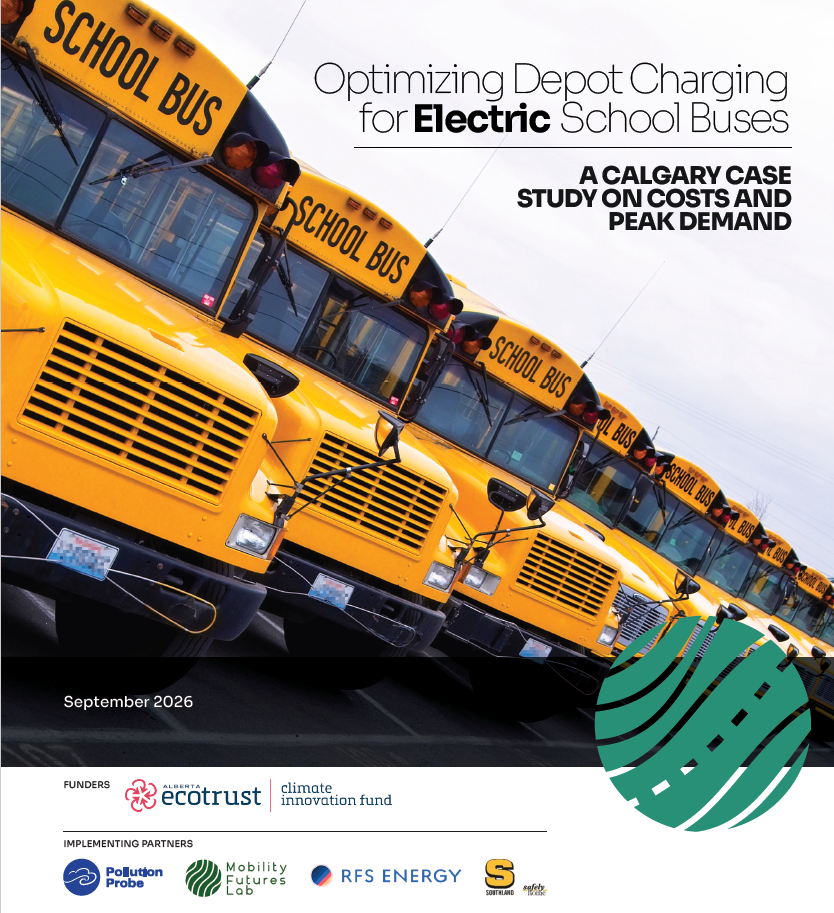
Optimizing Depot Charging for Electric School Buses. A CALGARY CASE STUDY ON COSTS AND PEAK DEMAND
Overview
As school bus fleets transition from diesel to electric, charging infrastructure is becoming one of the most important factors influencing cost, operations, and long-term scalability.
This report examines how different charging approaches impact electricity costs and infrastructure needs for a school bus depot in Calgary, Alberta. Using a real-world fleet case study, the analysis highlights how coordinated “smart charging” can help operators reduce costs, better manage electricity demand, and support future fleet growth.
Developed by Pollution Probe in partnership with Mobility Futures Lab and RFS Energy, the report provides practical guidance for organizations planning electric school bus deployments and charging infrastructure investments.
What You’ll Find Inside
- Key considerations for planning electric school bus charging infrastructure
- Insights into how electricity pricing and charging schedules affect operating costs
- A comparison of unmanaged and smart charging approaches
- Real-world example of how smart charging can reduce peak demand and infrastructure requirements
- Practical considerations for fleets, utilities, and policymakers supporting electrification
Why It Matters
Many organizations entering electric school bus electrification are familiar with fuel costs but less familiar with how commercial electricity pricing works. As electric school bus fleets scale, unmanaged charging can create electricity demand spikes that increase costs and strain local infrastructure.
This report explains these concepts in a practical and accessible way, showing how smart charging can help fleets reduce costs, avoid unnecessary infrastructure upgrades, and support long-term electric school bus deployment.